How to Restore Victorian Pine and Edwardian Oak Floors in Acton Homes
If you own a period property in Acton, your floor is not just a surface underfoot. It is part of the building’s story. In parts of Acton, especially around historic terraces and conservation areas, Victorian homes remain a defining part of the local streetscape, which means original timber floors are still hidden beneath carpets, vinyl, old varnish and decades of wear. Acton Floor Sanding regularly works with heritage timber floors across the area, and the right restoration approach depends heavily on one question: are you dealing with soft Victorian pine boards or denser Edwardian oak?
That distinction matters because Victorian pine and Edwardian oak behave very differently during sanding, gap filling, staining and sealing. Pine is softer, usually wider-boarded, more vulnerable to impact damage and often affected by movement, paint build-up and subfloor issues. Oak is harder, more dimensionally stable and often found in strip flooring, parquet or more refined layouts, but it still presents its own risks, including over-sanding, black staining, adhesive failure and uneven sheen after finishing. Choosing the wrong sanding pressure, grit progression or finish system can flatten character, expose repairs, or shorten the life of the restoration.
For homeowners in W3, the goal should never be to make a heritage floor look “new” in the artificial sense. The goal is to restore structural soundness, visual coherence and long-term durability while respecting the timber species, the age of the building and the way the floor was originally laid. That is why professional assessment comes first: timber type, board thickness, moisture behaviour, movement, prior coatings and subfloor condition all affect the restoration plan. If you are comparing options for your property, this guide explains how Victorian pine differs from Edwardian oak, what can safely be improved, and how to achieve a finish that suits modern family life without erasing period character.
Why Acton Heritage Floors Need a Species-Specific Approach
Acton’s period housing includes Victorian terraces and later homes where original timber floors remain one of the most valuable retained features. In heritage settings, restoration is usually a better long-term decision than covering or replacing the boards, especially where original materials contribute to the architectural feel of the property. Historic England notes that traditional terraced housing often carries heritage significance even when not individually listed, and original fabric should be understood before alteration.
The problem is that too many floor restorations are still approached as if all timber behaves the same. It does not. A late-Victorian pine floor in a draughty ground-floor front room responds differently to sanding and finishing than an Edwardian oak floor in a drier first-floor reception room. Pine compresses more easily, shows sanding marks faster and may require sliver repairs where decades of shrinkage have opened the joints. Oak generally tolerates use better, but the denser grain can highlight poor edging, chatter marks and badly chosen stains.
This is why the first site visit should include moisture-content mapping, board inspection, nail and fixing checks, previous coating identification, and an honest conversation about expectations. Not every gap should be filled. Not every dark mark should be chased out aggressively. Not every floor should be stained. Good restoration is technical before it is cosmetic.
Victorian Pine: What Makes It Different
Victorian pine floorboards are common in London period housing and are often one of the most rewarding floors to restore. Once hidden under old carpet, they can completely transform a room. However, pine is a softwood, which means it dents more easily, absorbs wear in traffic lanes and responds quickly to poor sanding technique. The Acton Floor Sanding team’s own Victorian pine restoration guidance highlights common issues such as wide movement gaps, old paint layers and the need for sympathetic treatment rather than aggressive flattening.
In practical terms, Victorian pine usually presents several familiar challenges:
- deep paint or bitumen contamination from previous coverings;
- cupping, crowning or slight unevenness across old joists;
- wide seasonal gaps between boards;
- historic splits near fixings;
- wear around fireplaces, thresholds and chimney breasts;
- a softer surface that can be over-cut if the operator is careless.
Because of that, a restoration plan for pine often starts with controlled coarse sanding only where necessary, not automatic over-machining. On many floors, a 36–40 grit opening pass may be justified to remove stubborn coatings or flatten heavy lipping, but the operator then needs to refine the surface methodically through medium and fine abrasives to avoid washboarding and swirl marks. The final appearance of pine depends heavily on restraint. Over-sand it and it loses its age, its texture and sometimes its structural margin.
Gap filling also needs judgment. Where gaps are hairline to moderate and relatively consistent, a resin-and-sawdust mix can improve appearance and reduce draughts. Where gaps are wider, traditional timber slivers are the better repair because they move more naturally with the boards and provide a more durable result. That is also the method highlighted in the site’s existing Victorian pine content for Acton.
Edwardian Oak: Stronger Timber, Different Risks
Edwardian oak floors usually feel more refined and more substantial underfoot. The timber is denser, the grain more defined and the finished result often sharper, especially in reception rooms, hallways and parquet layouts. But “harder” does not mean “simpler”. Oak restoration still demands precision.
On oak, the biggest errors usually come from assumptions. Contractors may assume the floor can simply be sanded more aggressively because the wood is harder. In reality, oak highlights machine marks, poor edging and inconsistent finish absorption very quickly. Black tannin staining from old moisture exposure may remain visible even after substantial sanding. Historic repairs in a different species can suddenly stand out. Patch replacement can also be difficult because newer oak often differs in colour and grain from aged boards.
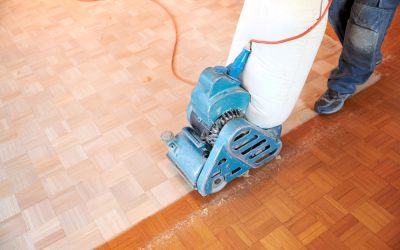
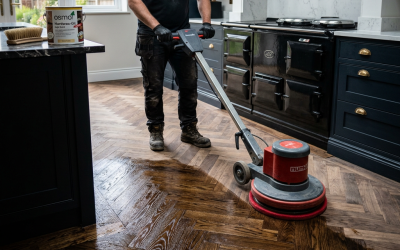
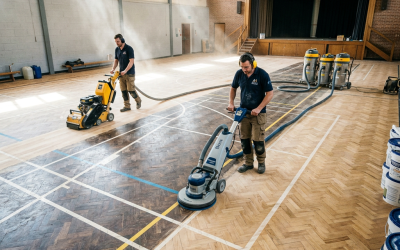
Where the oak floor is parquet or patterned, the restoration process becomes more technical again. Loose blocks, failed bitumen, broken tongues and uneven block heights all need repairing before finishing. The existing Acton parquet restoration page rightly emphasises that preparation, block stability and staged sanding are central to a successful parquet project.
Another point many homeowners miss is sheen. Oak can look beautiful in matt, satin or richer oil-based finishes, but every finish choice changes how the grain reads. A high-build lacquer may make a formal Edwardian room feel brighter and more practical. A hardwax oil may give better grain depth and a more natural heritage feel. Neither is “best” in every room. The right finish depends on traffic, maintenance expectations, pets, children, room light and whether local spot repair matters to you.
Victorian Pine vs. Edwardian Oak: The Practical Differences
1. Hardness and wear pattern
Pine bruises and dents faster. Oak resists impact better. In family houses, Victorian pine often shows wear as soft troughing in walkways, while oak tends to show surface abrasion and finish wear before the timber itself appears badly affected.
2. Movement and gaps
Pine floorboards in older houses tend to show wider seasonal movement, especially on suspended timber floors with ventilation and fluctuating humidity. Oak generally feels more stable, although movement still occurs if humidity control is poor.
3. Sanding tolerance
Pine needs a lighter touch and more discipline at the machine. Oak tolerates restoration well, but dense grain and existing repairs are less forgiving visually.
4. Repair strategy
Pine often benefits from reclaimed-board slivers and sympathetic colour matching. Oak repairs usually demand closer grain and tone matching, particularly in visible reception spaces or parquet panels.
5. Finish behaviour
Pine can blotch slightly with some stains and tends to benefit from careful finish selection. Oak accepts a wide range of finishes beautifully, but tannin and grain contrast can make colour decisions more critical.
How a Professional Restoration Process Should Work
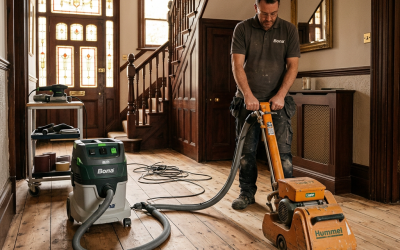
A high-standard heritage floor restoration in Acton should follow a clear sequence rather than a rush to sanding. That sequence usually includes:
- Initial inspection – identify timber type, board thickness, prior repairs, subfloor stability, fixings, moisture risk and finish history.
- Preparation – remove carpet grippers, nails, staples, threshold strips and unstable patch repairs.
- Repair stage – secure loose boards or blocks, insert slivers where appropriate, replace isolated damaged sections and address minor subfloor movement.
- Sanding sequence – use an appropriate grit progression, often beginning coarse only where genuinely needed, then refining through medium and finishing passes.
- Edge and detail work – blend perimeter sanding, corners, hearth edges and door thresholds without dish-out.
- Filling and refinement – resin fill where suitable, final denibbing and full dust removal.
- Sealing and protection – apply the correct system for the timber, room use and sheen requirements.
Where engineered boards are involved elsewhere in the house, the process differs again because wear-layer depth becomes critical. Acton Floor Sanding’s own guide notes that engineered floors with a genuine timber wear layer can often be sanded, but only within safe limits and with precision. That is an important distinction if your house has a mix of original oak, Victorian pine and later engineered additions.
Choosing the Right Finish for Heritage Floors
Finish selection is not an afterthought. It shapes the look, maintenance burden and service life of the floor.
For clients wanting maximum durability and shorter disruption, a professional two-component waterborne lacquer such as Bona Traffic HD is often a strong option. Bona states that Traffic HD offers very low VOC content, high scratch and chemical resistance, and full cure in three days in one current technical sheet, while another current Bona product page notes that full traffic can be resumed after 12 hours for that version and application context. In practical terms, this makes high-performance lacquer especially useful for busy family homes, hallways and living spaces where downtime matters.
For homeowners who prefer a more natural, lower-sheen appearance with easier localised maintenance, Osmo Polyx-Oil remains a popular hardwax-oil system. Osmo’s UK guidance says the floor can take light use once the two coats have dried, but full curing typically takes around 10 to 14 days, and the surface should not be covered during that period. That makes hardwax oil excellent for grain depth and traditional character, but it does require realistic aftercare expectations.
As a broad rule:
- Victorian pine often looks excellent in matt lacquer or carefully applied hardwax oil, depending on whether you prioritise protection or a softer heritage look.
- Edwardian oak can carry either system beautifully, but the right sheen is critical; too much gloss can make a period room feel overly modern.
Where technical standards and maintenance expectations are concerned, recognised wood-floor guidance remains valuable. The NWFA states that its technical guidelines are intended to help guide wood-flooring situations and homeowner care decisions.
Common Mistakes Homeowners Make with Period Floors
- Assuming all gaps must be filled. Some movement is normal and part of the building’s behaviour.
- Choosing colour before fixing the substrate. Structural issues and moisture problems must come first.
- Using the wrong cleaner afterwards. Steam mops and over-wetting shorten the life of restored timber floors; the Acton site’s maintenance guidance warns against that approach.
- Over-sanding to remove every mark. Heritage value often lies in character, not sterile perfection.
- Picking a finish based only on appearance. Kitchen traffic, pets, children and future maintenance matter just as much as colour.
Which Floor Adds More Value: Victorian Pine or Edwardian Oak?
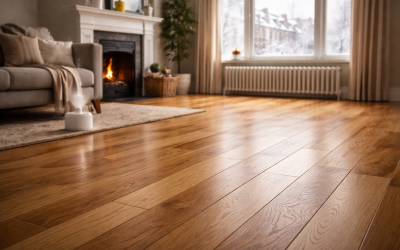
In truth, both can add meaningful appeal when restored properly. Buyers and homeowners respond to authenticity, condition and finish quality more than they respond to species labels alone. Victorian pine, when professionally repaired, draught-reduced and sealed, can give a house warmth and original character that laminate can never imitate. Edwardian oak often reads as more premium and formal, especially in larger front rooms, hallways and parquet settings.
The greater value comes from doing the restoration properly: stabilising the floor, preserving original material, using the right finish system and achieving visual consistency throughout the property. In a competitive West London market, original floors that feel solid, clean, coherent and period-appropriate strengthen the overall impression of the home.
When to Call a Specialist in Acton
You should bring in a restoration specialist if your floor has wide gaps, movement underfoot, black staining, old adhesive contamination, damaged parquet blocks, multiple prior coatings, or uncertain timber type. Heritage floors reward experience. They also punish guesswork.
If you are planning a period-floor project in W3, start with an assessment from Acton Floor Sanding so the restoration method matches the species, the age of the boards and the realities of your home. You can also review their floor sanding prices before booking a survey.
Final Thoughts
Victorian pine and Edwardian oak are not rivals in the sense of one being universally better than the other. They are different historic materials with different strengths. Victorian pine brings softness, warmth and unmistakable period charm. Edwardian oak brings density, definition and a more formal finish. Both deserve a restoration process built around timber behaviour, not shortcuts.
For Acton homeowners, the smartest approach is simple: identify the species properly, repair what matters, sand with restraint, choose a finish that suits the room, and work with specialists who understand heritage flooring rather than treating it like generic timber. Done well, your original floor will not just look better. It will feel right for the house, perform better in daily life and remain a genuine asset for years to come.